The “ASH Way”: Collective Responsibility and Student Success at the Albany School of Humanities
By Maria I. Khan, Kristen C. Wilcox & Oema Rambharose
For over two decades, NYKids has studied positive outlier schools to better understand what is associated with above-predicted student outcomes across diverse educational contexts. Our latest NYKids study explores four interconnected areas: academic learning and programming, social-emotional learning and youth mental health; educator preparation, support and organizational capacity; and family engagement and community relationships.
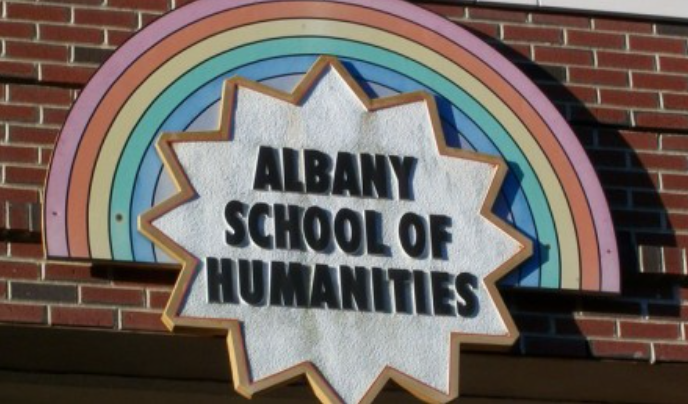 We are excited to announce the latest NYKids case study featuring Albany School of Humanities (ASH), an elementary magnet school in Albany, New York serving students from more than 40 countries and various linguistic backgrounds.
Research consistently demonstrates that students learn best in environments where they feel academically supported, socially connected, and feel a sense of belonginess and cultural affirmation. At ASH, these commitments are visible not only in programming, but in the everyday routines and organizational practices shaping school life.
A Culture of High Expectations: The “ASH Way”
Success at ASH is defined by a deeply internalized mindset some refer to as the “ASH Way”—a collective belief in student capability and a refusal to lower expectations. Educators use language like “unfinished” or “yet” to signal that learning is a continuous journey for both students and staff. This isn’t just about academic rigor; it’s about collective teacher efficacy –purposefully nurtured. Teachers describe a culture where the principal through her “Wonder Woman Schedule” focused on maximizing adult-student interaction and instructional time.
Belongingness and Multilingual Access
 The moment you enter ASH, you are greeted by flags from over 40 nations, a visual signal that every student’s heritage is a central part of the community. But belonging goes deeper than decor. To bridge linguistic barriers, ASH educators utilize Language Line Solutions, providing real-time translation for dozens of languages, and the Class Dojo platform for automated parent-teacher messaging. As one parent noted, the school operates with a “circle the wagons” philosophy that extends to all learners and families. When a child struggles, the response is “all hands on deck,” ensuring that no student is left to struggle in isolation.
Collective Investment and Resource Equity
As a humanities-focused magnet school, ASH educators ensure that all children’s learning experience is enriched by arts, music, and theater, through:
- The PTA Engine: The ASH PTA is a powerhouse, raising over 80% of its annual operating budget through creative campaigns like “Clear the List” and seasonal flower sales.
- Zero Cost Enrichment: This fundraising, paired with teacher-led grants, ensures that high-level experiences like Broadway trips and museum visits are provided at “zero cost to the students.”
- Basic Needs with Dignity: The school proactively addresses economic barriers through a backpack program that sends food home weekly, alongside a school-based pantry and clothing closet.
Professional Culture and Distributed Leadership
Perhaps, one of the most telling indicators of ASH’s success is its professional culture and stability. Teachers describe ASH’s environment to be such that leadership responsibilities are shared across the school through collaborative structures, peer mentoring and teacher-led efforts. Several family members noted that many teachers have chosen ASH as their children’s school – this further reflects how the school community is built across school staff and parents. As one parent explained, “If the teachers are happy, then you know it’s a good place for kids. ”
In a Nutshell
ASH is distinct in its “no excuses” approach to supporting all students in meeting their potentials; championing diversity, equity, and inclusion; and focusing on developing agency and autonomy for learning within a culture of collaboration – and this extends from students to staff. At ASH, supports for whole child well-being, strong instructional leadership, and abundant enrichment opportunities help explain why the school “always has a waiting list” (district leader) and remains a magnet not just in designation, but in promising practices. ASH educators foster a school community where engagement between staff, families, and community members is grounded in trust, care, open communication and mutual respect.
Read the full case study here and stay tuned as NYKids continues to release additional case studies of more positive outliers this spring!
