
First Report from NYKids Study Now Available!
The NYKids team is pleased to announce that the first case study of Van Schaick Grade School is now available! This school was the first of nine schools to participate in our latest study: “Promising Practices from Elementary Positive Outlier Schools.”
As we outlined in a previous blog, this new study is designed to address critical questions on the minds of educators, researchers, and policymakers including:
- What specific instructional practices are most effective for supporting diverse elementary learners in meeting and exceeding grade level proficiency targets in core subjects and extracurriculars?
- How do positive outlier school educators build and sustain collaborative cultures among teachers and staff in service of children and youth?
- What role does leadership play in creating conditions for both staff and student learning and persistence?
- How do educators effectively partner with families and communities to better serve children and families?
Van Schaick Grade School
We visited Van Schaick Grade School in March, 2026 to learn from educators, leaders, and support staff about what makes their school unique. Located in the city of Cohoes, New York, only ten miles north of Albany, Van Schaick has the feel of a “small school” – as many educators put it – due, in part, to its geographic location: nestled on Van Schaick Island between the Mohawk and Hudson Rivers.
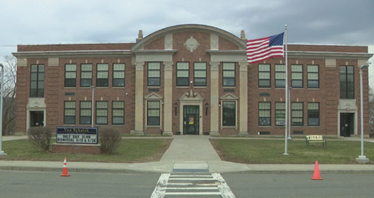
The school is the smallest of three elementary schools in the district and serves 124 students from kindergarten through fifth grade. A Pre-K wing, administered by the Boys & Girls Club of America, is housed in the basement wing of the school building.
The entire case study is available on our website, and here are a few of the highlights we found at Van Schaick:
Working Together to Meet Students’ Needs
I know these people have my back, my principal has my back, and just that we’re in it together. – teacher
A strong culture of collaboration and collegiality was evident across interviews at Van Schaick. Educators described a strong commitment to the school and community, with many not only living within the district but having grown up there as well. Strong communication among colleagues and between teachers and leaders was also described as an important feature of the school, as educators regularly meet with each other to discuss how to best meet the needs of students, problem-solve, or share materials. Colleagues have a formal opportunity to work with one another through Professional Learning Communities (PLCs) in which they design their own projects.
Using Data to Drive Decisions and Allocate Resources
So we’re really drilling into data to make decisions, not when my gut says he needs it, or I feel he needs it, or he’s been getting it. . . . [T]his is about student need. And when you’re using data, you can have those conversations because it will tell you what the need is. – district leader
 The use of data to drive decisions was a common refrain among educators at Van Schaick. Using diagnostic tools such as iReady and AIMSWeb, educators felt they could “pinpoint” – as one district leader put it – the exact needs of their students and thereby tailor particular interventions to help them succeed. Through continual data monitoring, educators are able to check whether an intervention is working or if changes are needed. This process ensure that students are given the support they need but also that district resources are allocated effectively and efficiently. This strategic use of data is one example of the way equity underlies many initiatives described by educators at Van Schaick; others include the shift to a coteaching model in Kindergarten and the districtwide transition to a Multi-Tiered System of Supports.
Supporting Student Growth through Consistency and Care
We meet the kids where they are and then bring them forward . . . even if they are struggling. – teacher
At Van Schaick, educators hold high expectations for every student no matter what their aptitudes or backgrounds are. Student success was characterized by educators in terms of individual growth for each student and not purely as an academic measure; social-emotional progress is prioritized at the school as well. As many educators noted, their school is a reliable and “safe” place where students can learn and grow even when their lives outside of school may involve difficulty. The caring climate of Van Schaick is supported through consistency, not only by the veteran leaders of the school and district, but in the stability and alignment to curriculum that links educators to a set of shared instructional practices.
Read the full case study here and keep an eye out for new case studies to follow throughout the spring!
For more information about our research, please visit the NYKids website or contact the research team at nykids@albany.edu.
You can also find us on LinkedIn, Facebook, Instagram, and Bluesky!
