
NYKids Study Report Now Available: Powerful Lessons from Positive Outliers: A Study of New York State Elementary Schools!
What can we learn from elementary schools whose students are achieving better-than-predicted academic and attendance outcomes?
That question guided NYKids’ newest study, now available here! The report features nine elementary schools located across New York State and addresses some of the most pressing issues facing educators, researchers, and policymakers including:
- School climate and culture
- Mental health and social-emotional learning
- Academic readiness and performance
- Educator workforce recruitment, retention, and capacity building
- Family and community engagement
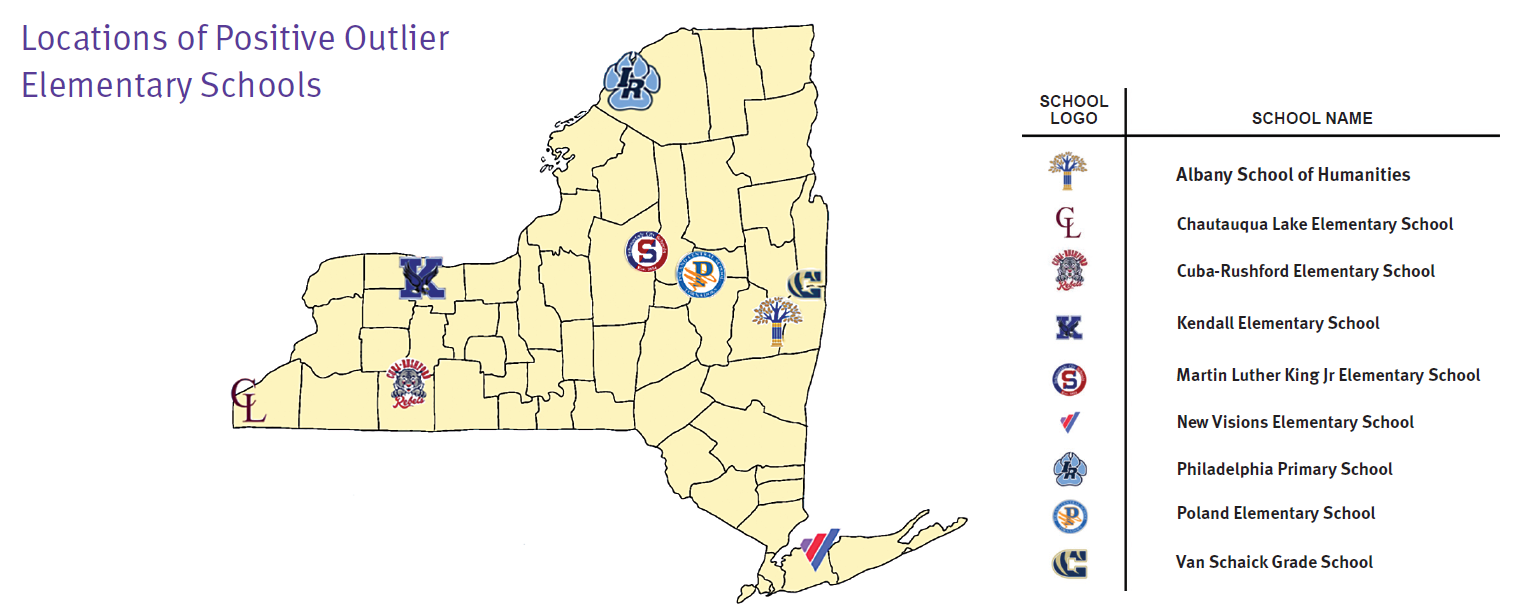
In total, our team conducted interviews and focus groups with 282 participants at the nine schools that participated in the study including: leaders, teachers, staff members, children and family members.
Major Findings
The positive outlier schools shared a purposeful focus on the following:
1) Cultivate a Student-Centered Culture of Inclusion, Safety, and High Expectations
2) Make Learning Relevant, Responsive, and Empowering
3) Prioritize Student Well-Being and Whole-Child Development
4) Strengthen Educator Competencies and Build Organizational Capacity for Improvement
5) Engage Families and Strengthen Community Partnerships
- Cultivate a Student-Centered Culture of Inclusion, Safety, and High Expectations.
All the kids are all of our kids. We all know them very well. – teacher (Van Schaick)
First, educators developed a school culture which prioritized high expectations, targeted support, and strong adult-child relationships. With an emphasis on promoting safety and inclusion for all students, educators ensured that all students felt cared for and seen at their school thus contributing to their enjoyment of school and higher attendance rates.
- Make Learning Relevant, Responsive, and Empowering
The curriculum has to be responsive to student needs. We don’t want anything that’s a one-size-fits-all. — district leader (New Visions)
Educators promoted academic success through relevant, responsive, and empowering learning experiences aligned with the interests of their students. While ensuring that students were taught foundational skills, educators at positive outlier schools also encouraged student agency and voice in enrichment activities. With an eye toward preparing children for the future, these efforts were designed to ensure that students would be successful throughout their school career and beyond.
- Prioritize Student Well-Being and Whole-Child Development
Mental health is on the forefront for every school district, and it should be because we’re seeing increasing needs. . . . It [mental health support system] is a huge undertaking that’s needed right now, and you have got to put resources there. – district leader (Kendall)
In response to the rise in mental health and social-emotional challenges for children across the state and country, educators at positive outlier schools created new and effective interventions including embedding social-emotional learning into school curricula and applying targeted supports to address students’ mental health needs. Additionally, educators have implemented restorative and empathetic approaches to discipline while ensuring school served as a consistent and stable space that encourages every child’s safety, positive development, and growth.
- Strengthen Educator Competencies and Build Organizational Capacity for Improvement
We believe in the power and genius of our teachers, so when they have a really amazing idea… we are all in with “What can we do to help?” – school leader (Chautauqua Lake ES)
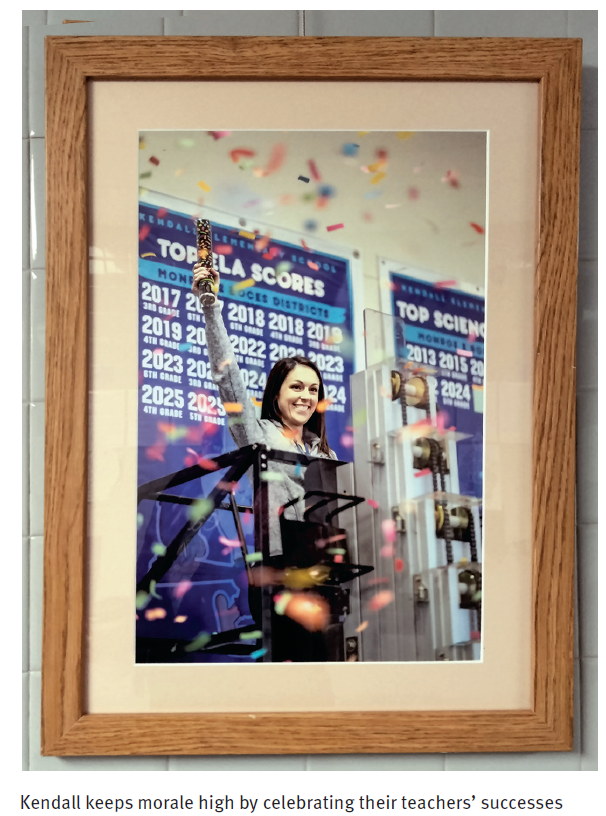
Fourth, our findings highlight the importance of creating conditions in which educators can succeed. At each of the schools, we found that collaboration and ongoing professional learning, combined with supportive leadership helped staff members respond to changing student needs and drive improvement efforts. Educators at each school described their school as a place where colleagues worked together, shared expertise, and viewed the success of every student as a collective responsibility.
- Engage Families and Strengthen Community Partnerships
Our partners are invaluable to us. Our system of care partners over the last four years has really filled a void. – district leader (MLK)
Finally, families and community organizations were viewed by educators in this study as essential partners in supporting children’s development. To strengthen relationships with family members and caregivers, educators reported using frequent and accessible communication, community events, and specialized outreach. For these communities, the elementary school also served as an important site that connected children and families to resources and services as well as a hub for family members and communities to gather.
You can read our entire report right here and stay in the loop with NYKids by signing up for our newsletter using this link.
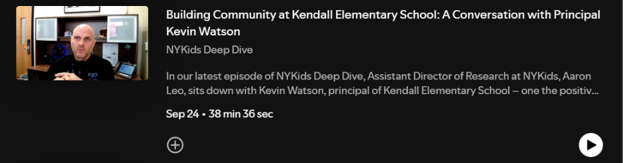
Don’t forget to check out our podcasts featuring leaders from several positive outlier schools!
We can be reached at nykids@albany.edu for questions, comments, requests for workshops or other district school improvement support.
