
Building a Supportive and Collaborative School Culture: Cuba-Rushford Elementary School Case Study Now Available!
We’re excited to announce that a new case study is available on our website!
 Our eighth positive outlier is Cuba-Rushford Elementary School, located in the rural setting of Cuba, New York. Within the district there are 13 small towns, including Cuba where visitors can find a main street decorated by hand-painted murals, quaint eateries, and an artisan cheese shop. Although residents may have to travel over 40 minutes to find larger stores or other amenities, the quiet and close-knit community – as well as two scenic lakes just miles from the school – are sources of enjoyment for those who live in the district.
Educators at Cuba-Rushford see their roles as holistically supporting students by providing engaging and relevant academic offerings as well as social-emotional learning programming and mental health resources. This sentiment extends to family members as well, who are treated as equal partners and invited to collaborate, with the shared goal of improving their children’s educational experience.
Highlights at Cuba-Rushford Elementary School include:
Creating a Culture of Communication and Collaboration
[We’re] here to serve every student every day and trying to create a good culture where people can share concerns. – superintendent
The culture of Cuba-Rushford is nurtured by high levels of collaboration among educators, leaders, and students’ families. School and district leaders, for instance, utilize forms of distributed leadership that invite feedback and input from staff members on important decisions, while scheduled meeting times throughout the week allow teachers and support staff to meet regularly to discuss new initiatives or monitor students’ progress. These processes, along with the additions of key district-level positions, have bolstered alignment across grade-levels and school buildings.
Finally, educators at Cuba-Rushford engage families through proactive and creative communication strategies that position family members not as recipients of information, but as partners in a collective process to support their children.
Viewing Student Success Holistically
[We] have wonderful teachers that are so focused on the whole child… So what can they do to address their social-emotional needs, as well as [what they] can do to prepare students academically. – principal
Student success at Cuba-Rushford Elementary is viewed holistically, with numerous staff viewing happiness, safety, and well-being as goals that are inseparable from academic outcomes.
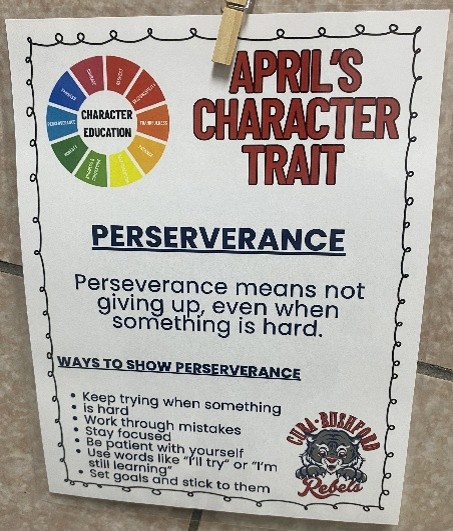
Alongside the push for academic rigor, the utilization of social-emotional learning (SEL), emphasis on character traits, and the use of restorative justice strategies all contribute to the development and support of children.
As many educators attested, the recent adoption of a Multi-Tiered System of Supports (MTSS) has helped support students holistically, as it provides a clear and systematic way to monitor both academic progress and social-emotional well-being. The MTSS framework allows educators to develop data-driven interventions and targeted supports for students who may be struggling.
Building a Positive School Environment
[Students] feel safe and they feel cared about. I think when they are feeling safe and cared about, they want to come to school. And when they’re happy, emotionally, you can just tell that they can’t wait to see you. – teacher
 Under the district motto, “Every Student Every Day,” educators at Cuba-Rushford described their concerted efforts to build strong relationships with each and every student. These relationships contribute to an overall positive school environment that is strengthened by a range of programming and activities designed to engage students.
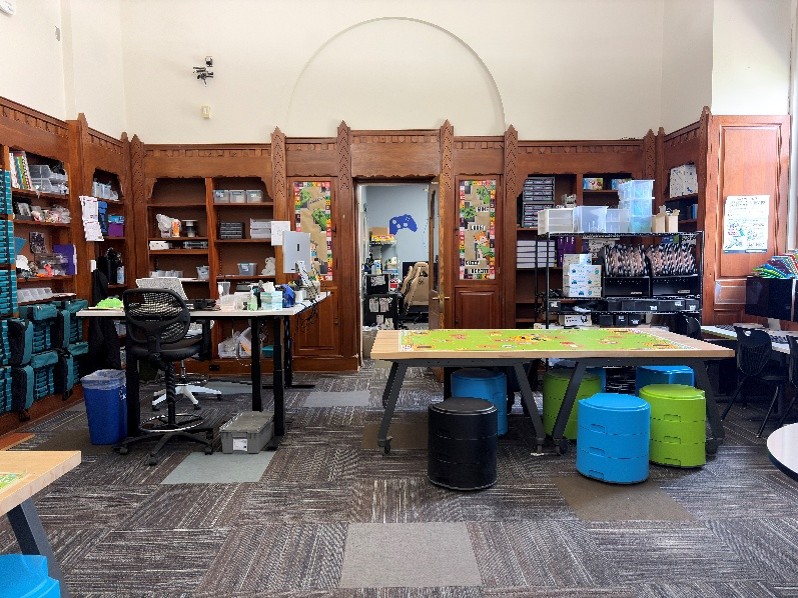
A new playground and STEAM (Science, Technology, Engineering, Arts, and Mathematics) room (pictured to the right) as well as clubs, extracurriculars, and activities that often extend into the weekend and summer were mentioned by educators as some of the many ways to promote student engagement and attendance.
Summing it Up
Educators at Cuba-Rushford Elementary School foster a culture of communication, inclusion, and care. Through data-driven interventions, engaging academic and extracurricular programming, and collaborative decision making, educators promote both students’ academic success and well-being while striving to build partnerships with families.
These practices contribute to a positive and inclusive school environment where students are engaged, supported, and positioned to thrive academically, socially, and emotionally.
Read the full case study here – and be sure to follow us on LinkedIn, Facebook, Instagram, and Bluesky!
For more information about NYKids’ research, please visit the NYKids website or contact the research team nykids@albany.edu.
