
New Podcast Episode Alert: How Continuous Improvement Tools Can Transform P-20 Partnerships
What if the secret to addressing complex problems across the P-12 and higher education pipeline lies in deeper understanding of 1) human experiences and 2) interconnected systems that shape what resources are available and drawn upon. In our latest podcast episode, Dr. Kristen C. Wilcox from the University at Albany and NYKids Director sits down with Dr. Matthew T. Missias from Grand Valley State University to explore how continuous improvement protocols and processes can support collaborations, which in turn can affect improvements in access and equity across P-20.
The Challenge
Educational partnerships across the P-20 pipeline—from preschool through graduate education—face persistent challenges. Whether you’re working in charter schools, traditional public schools, or higher education institutions, you’ve likely encountered challenges that seem resistant to siloed problem-solving approaches. The disconnect often lies in our inability to see both the forest and the trees: the individual human experiences within the larger systems we navigate daily.
Collaborative Approaches to Problem Understanding and Solution Co-designing
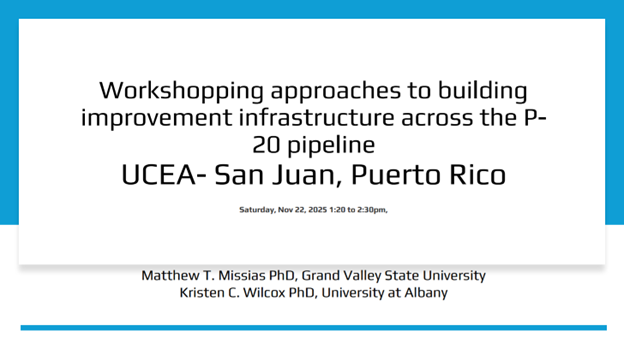
This blog announces a new podcast with our guest Dr. Matt Missias and NYKids Director Dr. Kristen Wilcox. They highlight two powerful continuous improvement tools they workshopped at the University Council for Educational Administration (UCEA) annual convention that are supporting how educators approach collaborative continuous improvement: empathy mapping and ecosystem mapping. These are practical protocols grounded in improvement science principles that help P-12 and higher education partners move from superficial to deep understandings of what is and isn’t working for whom and under what conditions.
The podcast focuses in on Ecosystem mapping that Dr. Missias explains reveals the complex web of people, organizations, ideas, and contexts that influence educational problems. By visualizing these interconnections, partners can identify leverage points they might have otherwise missed. Who are the unexpected allies? What systems intersect with the improvement work? Where do opportunities for collective impact exist?
Key Insights
Dr. Missias shares his framework for collaboration with P-12 partners—COVET—Communication, Openness, Vulnerability, Experience, and Trust—as essential elements for successful partnerships. This isn’t soft skills work; it’s the foundation that allows collaboration improvement to flourish in real-world settings.
Dr. Wilcox emphasizes the importance of anchoring partnership work in improvement science principles: being problem-focused and user-centered, integrating research into strategic planning, and deliberately inviting diverse professionals into continuous improvement teams. Her work with NYKids’ COMPASS process demonstrates how these principles translate into sustained, evidence-based support for school improvement.
Why This Matters Now
As educational institutions grapple with chronic absenteeism and persistent equity of opportunity gaps, we need new approaches that honor both individual experiences and systemic complexity. Traditional university-school partnership models often fail because they treat school improvement as a one-way street with university researchers providing research and resources for consumption by P-12 professionals.
A collaborative continuous improvement approach offers an alternative: partnerships built on mutual sensemaking, which both empathy and ecosystem mapping support.
Join the Conversation
Whether you’re a school leader, researcher, professional development specialist, policymaker, or community organization member, this episode offers practical tools you can implement immediately.
See the workshop slide deck on the NYKids website and reach out to nykids@albany.edu if you would like to learn how to facilitate empathy mapping sessions, create your own ecosystem maps, and build the kind of trust-based and mutually-beneficial partnerships that actually move the needle toward your goals.
Listen now on Apple Podcasts and Spotify!
