
Enhancing Citizenship Skills with New York State’s Portrait of a Graduate
Over the last two years, the New York State Education Department (NYSED) has been engaging in an ambitious effort to transform education in New York State, aligning with the recommendations from the Blue Ribbon Commission on Graduation Measures.
One of the major contributions developed through this work is the “Portrait of a Graduate” (POG).
In this blog, we give a basic overview of the POG and explore one of its main components: Global Citizenship.
Development of the “Portrait of a Graduate”
In 2019, the New York State Board of Regents and the Education Department undertook a project to redefine the requirements for graduation across the state. According to NYSED, this “Graduation Measures” initiative aimed to “advance equity in New York State’s public education systems” and “ensure that all New York students gain the knowledge and skills necessary to succeed in school and after they graduate.”
Through this work, the POG was born. The “Portrait” provides a vision for, and definitions of the interpersonal and intellectual skills, sensibilities, and knowledge educators will seek to develop in all graduates throughout New York State.
The Portrait’s Roots
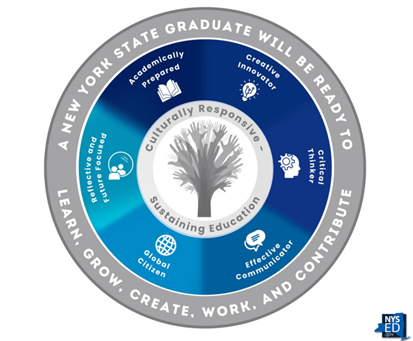
The POG is comprised of six components and is grounded in the principles of Culturally Responsive-Sustaining Education, ensuring that all students build “strong, respectful, relationships, valuing diverse perspective[s].” Here at NYKids, we find connections to frameworks informing our own current study, namely, positive youth development which conceptualizes healthy youth development through six interconnected competencies:
- Competence: Positive view of one’s actions in specific domains (academic, social, cognitive, vocational)
- Confidence: Internal sense of overall positive self-worth and self-efficacy
- Connection: Positive bonds with people and institutions
- Character: Respect for societal and cultural rules, integrity, moral centeredness
- Caring: Sense of sympathy and empathy for others
- Creativity (the +1): Ability to generate novel ideas, solve problems innovatively, and adapt to change
As outlined by NYSED, the Portrait will require all high school graduates to have the following skills and attributes:
- Academically Prepared: demonstrating a strong foundation in the New York State learning standards and being equipped with the knowledge and skills necessary to achieve success in college, careers, civic engagement, service, and life.
- Creative Innovator: utilizing imagination, curiosity, and flexible thinking to solve problems creatively, and develop new ideas and products, while adapting to evolving circumstances and challenges.
- Critical Thinker: analyzing information thoughtfully, evaluating evidence critically, and identifying patterns and connections between different pieces of information (across multiple content areas) to address complex issues and navigate the world with insight.
- Effective Communicator: articulating ideas clearly and confidently through speaking, writing, and the use of different types of media for various purposes, while engaging with diverse audiences and actively listening to different perspectives.
- Global Citizen: acting responsibly and ethically within local, global, and digital communities, employing civic knowledge, skills, and mindsets to promote global sustainability and contribute positively to a culturally diverse, democratic society.
- Reflective and Future Focused: engaging in self-reflection to identify strengths and areas for growth, setting meaningful goals, using social awareness to maintain supportive relationships, and demonstrating responsible decision-making that prioritizes social, emotional, and mental well-being.
Focusing on Global Citizenship
As the POG is centered around the principles of culturally responsive and sustaining education, we took the opportunity to explore some of the research supporting one of the attributes closely related to this topic: Global Citizenship.
In an increasingly interconnected and diverse world, POG encourages educators to develop civically-minded students who are ready to take an active role in their communities and the wider society in which they live. Instilling these principles in youth is crucial to ensure a sustainable and democratic future for New York and the United States.
However, civic engagement involves more than just voting in elections. Civic engagement requires students to participate actively in their communities while learning the skills to critically interpret complex messages they receive through the media and elsewhere. A range of scholarship has examined the positive impacts that community-based forms of education can have as educators connect students more deeply to the spaces and people around them. Over time, the relationships between schools, communities, and families can develop into true mutually-beneficial partnerships.
Second, becoming a Global Citizen helps students understand and appreciate the cultural, linguistic, and ethnic diversity they will encounter in an increasingly globalized world. These skills are not only crucial in today’s cosmopolitan world but are a prerequisite for a 21st century economic landscape which requires the ability to work with individuals from diverse backgrounds.
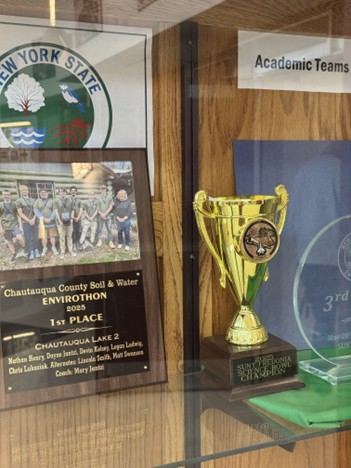
In our own research – even prior to the development of POG – we found that many positive outlier schools emphasized civic readiness and community-based learning. For instance, at Malverne High School, educators utilized community-based projects to connect youth to the vibrant history of Civil Rights activism of the area. In another context, educators at Brookfield Central School revitalized their Future Farmers of America program to reengage students and families interested in agricultural science. Most recently, we were delighted to engage with positive outlier – Chautauqua Lake Elementary – to learn about the many ways youth there are working to solve real world problems in and beyond their community.
Stay tuned for more updates about our latest research study and the latest news as we prepare for the American Educational Research Association Annual Meeting! For more information about NYKids’ research initiatives and opportunities to engage with this work and other resources, please visit the NYKids website or contact the research team nykids@albany.edu.
You can also find us on LinkedIn Facebook, Instagram, and Bluesky!
