Recent NYKids Publication Highlights Experiences of Special Education Teachers during COVID-19
Teaching has always been a demanding profession, but the COVID-19 pandemic amplified educators’ stress levels in new ways. In this unprecedented crisis, educators encountered a whirlwind of challenges including rapid shifts to remote learning and navigating health protocols.
While most of this research has focused on general education teachers, we wondered: What about those who teach students with special needs?
To address this gap in the literature, our most recent NYKids’ article published in Current Issues in Education explored the experiences of special education teachers (SETs) and compared their reported stress levels with their general education colleagues.
What we found was surprising – and holds important implications for researchers, educators, and policymakers.
Special Education Teachers during the Pandemic
The issue of stress and special education is crucial given that SETs have been found to experience higher levels of stress and burnout than general education teachers (GETs). It is more urgent than ever to understand what causes teacher stress and how to mitigate it, as districts across the U.S. are experiencing shortages of SETs. For instance, even before the pandemic, 49 states reported shortages of certified special educators, and nearly three-quarters of schools struggled to fill these roles.
The pandemic likely worsened this crisis as SETs reported high levels of stress as well as concerns about meeting their students’ needs – especially during school closures.
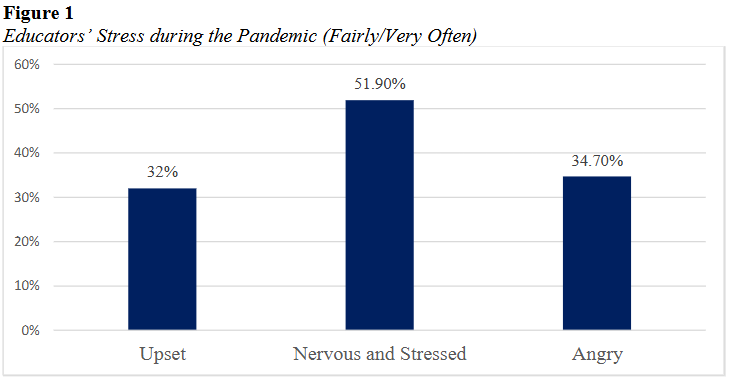
Figure 1 below illustrates the high stress levels reported by teachers in our study.
NYKids’ Latest Article
In our latest article, we utilized survey data which was gathered during our study, “Discovering Impacts of the COVID-19 Pandemic on the Education Workforce.” This embedded analysis compared the stress levels, perceived job demands, and access to resources reported by 344 general education teachers and 75 SETs.
Important, and somewhat surprising, results included:
- Compared to general education teachers, SETs scored lower on both work-related stress and COVID-specific stress measures
- SETs also perceived greater access to supports such as help for students, opportunities to weigh in on decisions, and tools for remote learning.
- SETs reported fewer challenges related to student engagement and parent communication during the pandemic.
These findings may seem counterintuitive given prior research showing SETs experience high stress and burnout, yet our research shows that resources and working conditions are crucial in mitigating stress. Overall, SETs in our study felt better supported by administrators and had access to tools that helped them adapt during the pandemic.
Highlighting SETs Voices
Open-ended responses were included at the end of our survey, and responses from SETs provided additional insights into their experiences during the pandemic. These responses were important reminders that, despite lower overall stress scores, SETs incurred significant stress and challenges.
Several SETs, for instance, described the difficulty of adapting lessons for both in-person and remote learners while addressing students’ mental health needs. One teacher wrote:
Every day more and more responsibilities have been given to me… I am constantly trying to support students in front of me and those online. I keep getting told to change, do this more, add this to my list but no one has stopped to ask how we are doing.
Others highlighted the emotional toll on students, noted how remote learning posed unique challenges for students with disabilities. As one SET explained:
Many of my students are suffering from emotional stress, anxiety, depression, and lack of motivation. They miss when school was in person every day.
Implications and Insights
Although the pandemic may be in the rearview mirror, this study has made it clear that educators – both general education teachers and those who serve students with special needs – are in need of support and resources to help offset the stress they experience. Such efforts are crucial to prevent burnout and attrition among educators.
Several implications can be drawn from this research including:
- Responsive and compassionate leadership can help support educators who are coping with stressful periods of work.
- Educators’ mental health must be prioritized to help prevent burnout and attrition.
- Additional measures such as mentorship programs and workload adjustments are needed to help address shortages in special education.
While the impacts of the pandemic continue to be felt by educators and students, this unprecedented disruption also provided a moment to reconsider how to support educators. Such changes can not only address workforce shortages but also help ensure that educators are able meet the needs of their students.
Thank you for your interest in NYKids! Please find the entire article available here, and we welcome your feedback at nykids@albany.edu. You can get the latest news from us on Instagram, Facebook, and LinkedIn!
