Educational Improvement Science: Global and Local Perspectives
By, Maria I. Khan
Educational Improvement Science (EIS) has emerged as one of the most promising approaches in transforming how schools and systems respond to persistent challenges. Unlike traditional reforms that often rely on top-down solutions, EIS emphasizes disciplined inquiry, collaboration, and adaptability. Drawing from diverse disciplines—including organizational learning, design thinking, and implementation science—EIS provides a structured way to test ideas, learn from variation, and scale what works – always in light of context.
Global Perspectives
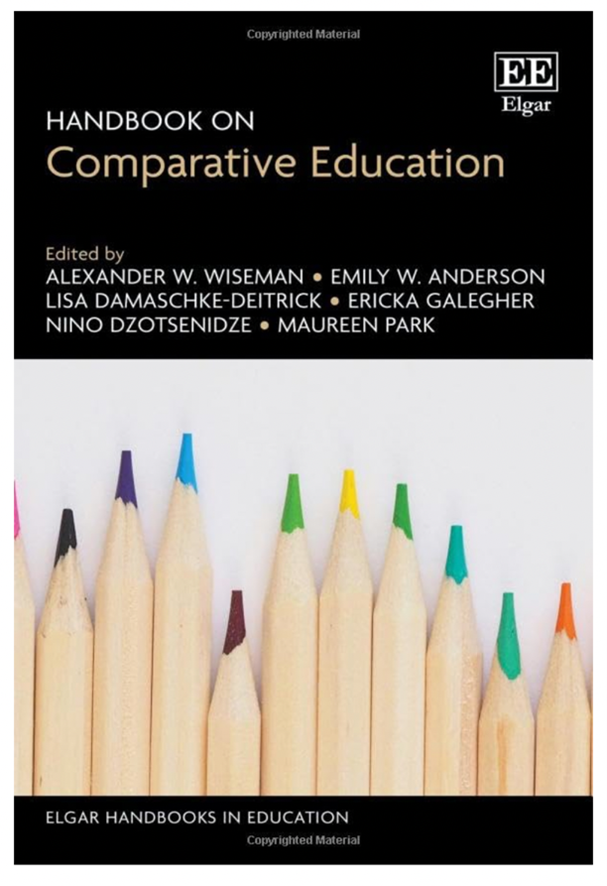 Around the world, educators and policymakers are taking up improvement science to strengthen educational systems. In a recently published chapter, “Educational Improvement Science as an Emerging Field: Global Perspectives,” (in the Handbook on Comparative Education, Edward Elgar, 2025), Dr. Jun Li and Dr. Maria I. Khan (NYKids research collaborator) examine how countries like Canada, China, and Pakistan are applying these ideas.
Our work shows how comparative education and improvement science can intersect to generate new insights into sustainable change. The chapter conceptualizes EIS as a newly emerging transdisciplinary field within international education, as well as its varied applications and significance in global perspectives. The chapter reminds the reader that EIS methods can be adopted for lasting improvement, while adapting them to the local culture, governance and community needs.
Insights from NYKids
In the New York State context, research from NYKids offers powerful examples of improvement science applied in real school settings. NYKids studies of “positive outlier” schools—schools that outperform expectations considering socioeconomic and ethnic and linguistic demographic factors—highlight common practices such as strong leadership, evidence-informed decision-making, and a relentless focus on equity.
 NYKids has also developed the COMPASS-AIM framework, a process that helps educators identify priorities in light of local assets and challenges, set SMART goals, and implement improvement cycles in ways that honor local needs. Importantly, NYKids’ research offers insights on how improvement efforts are most successful when they balance capacity (the tools, knowledge, and structures needed for change) with will (the motivation and commitment of educators and leaders).
Key Takeaways
- Global Relevance: EIS is applicable across various educational contexts, offering strategies that are adaptable from rural districts in New York to national reforms abroad.
- Collaborative Approach: Successful improvement efforts involve collaboration among all stakeholders, ensuring that changes are meaningful and effective.
- Evidence-Based Practices: Implementing data-driven strategies is crucial for continuous improvement and achieving equitable outcomes.
- Equity Lens: EIS does not just focus on averages but pays close attention to how different groups of students or teachers are served.
- Sustainability: Iterative testing helps education systems learn for lasting improvement over time, avoiding the cycle of adopting and abandoning reforms.
EIS represents both a field of study and a set of practical tools that empower educators to design meaningful change initiatives. Whether in a single classroom, a rural district, or a national system, the EIS invites us to slow down, learn systematically, and keep equity at the center of our work.
For those interested in exploring more resources, we invite you to:
- Take a look at NYKids’ latest report and recent blog post on International Perspectives on School Improvement and Effectiveness, which also discusses global approaches to collaborative continuous improvement in education (CCIE).
- Keep an eye out for (or even better attend) an upcoming presentation from NYKids Director Kristen C. Wilcox and Elizabeth Zumpe (University of Oklahoma), one of the co-editors of a soon-to-be-published volume on CCIE, to be presented at the University Council of Educational Administration (UCEA) conference on November 20th.
- Check out our Deep Dive Podcast series, which features conversations with educators and researchers on topics related to educational improvement and innovation.
